


Description
- Niet-invasieve AC-stroomsensor (30A max)
- Uitgangsmodus: Spanning / 1V
- Openingsmaat: 13 mm x 13 mm
- Leidende draad: 1.5 m
Dit is de SeeedStudio Niet-invasieve AC-Stroomsensor (30A Max). Het is een niet-invasieve stroomtransformator. Gebruik deze sensorclip om uw eigen persoonlijke energiemonitor te bouwen. Hij is geschikt voor de stroom metende monitoring en bescherming van AC-verlichtingsapparatuur, luchtcompressor enzovoort. Het is gemaakt met ferrietkernmateriaal en de openingsgrootte 13 mm x 13 mm voldoet aan uw vereisten.
Uitvoer grootte diagram (in mm):
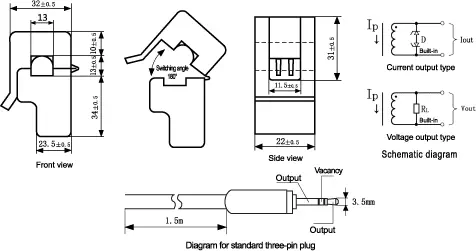
- Openingsmaat: 13 mm x 13 mm
- Niet-lineariteit +/- 3% (ingangsstroom 10% -120%)
- 1,5 m leidende draad, Ø3,5 drie-aderige stekker standaarduitgang
- Type stroomuitgang of Type spanninguitgang: Ingebouwde weerstand van het type stroomuitgang
- Kernmateriaal: Ferriet
- Mechanische sterkte: Het aantal schakelingen is niet minder dan 1000 keer (test onder 20ºC)
- Veiligheidsindex: Diëlektrische sterkte (tussen Shell en uitvoer) 6000V AC / 1min
- Brandwerendheidseigenschap: In overeenstemming met UL94-VO
- Werktemperatuur: -25ºC - + 70ºC