Descripción
- Cámara IR de factor de formato pequeño con seguimiento de hasta cuatro fuentes de calor / IR
- Se puede controlar con Arduino, AVR a través de la interfaz I2C
- Fácil de instalar y conectar
- Conexiones: cuatro cables con enchufes hembra para alimentación e I2C
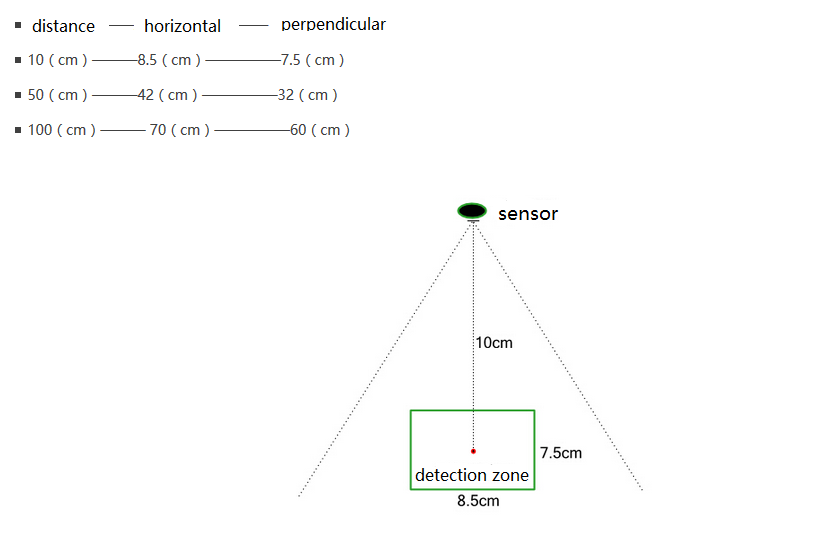
La Cámara de seguimiento IR es una cámara IR de factor de formato pequeño capaz de rastrear hasta cuatro fuentes de calor / IR. Tiene muchas aplicaciones, por ejemplo: seguimiento de robots con transmisores IR para la navegación a barreras de luz, determinando la dirección hacia donde va el objeto y funcionando como sensor de llama o seguimiento de fuentes de calor. Con sólo cuatro cables, es completamente compatible con Arduino. Esta cámara de posicionamiento infrarroja se puede controlar con Arduino, AVR a través de la interfaz I2C. Es capaz de rastrear puntos de infrarrojos móviles y transmitir los datos al host. El ángulo horizontal de la cámara es de 33 grados mientras que el ángulo vertical es de 23 grados. Devuelve hasta cuatro puntos a la vez cuando identifica un objeto.
![]()
The camera works very well. Has a flaw , it's a little expensive price .
The camera and code are excellent. It does have a short coming in the fact that they all have the same I2C address without the functionality to change them. All in all, still a great piece of hardware.
I think it is a convenient camera for the project I am working on. With its size it can be implemented easily in many different projects.
Camera is great, but I would like to say some points which could be better: - Alignment is not very well in many of them; I opened one and the main reason is because sensor is not properly soldered (it needs both sides, and it´s soldered only by one of them). - Delivery time is too long (in Europe) - Price could be cheaper. Appart from that issues, camera is really useful for me and my experiments.
Camera specs are actually a bit better than what's listed, at least it was on the unit I tested: * ~40° hFOV and ~30° vFOV * Range depends on the IR source: I had ~1.5m steady detection for a lighter flame and LEDs, but ~4m with a TV remote. Detection DOES require very precise 'aiming' at the sensor. LEDs need near perfect angles at greater distances. Only trouble I encountered was occasional trouble with the Processing code found on the wiki article. If you can code a bit, try to see if you can force resynchronisation of the serial port. I had to use LabVIEW for a school project and forced closing, reopening and reconfiguration of the port had it working every time on all tested computers. All in all, it's a very fun product for the price. I'd love to know if hacking the camera firmware is in any possible.